What is dentin and how to protect it: everything you need to know
Dentin, also known as ivory, is one of the essential components of our teeth, along with enamel, dental pulp and cementum. In this article, we will find out what dentin is, what its role is and how we can protect it.
Dentin is a calcified tissue that forms the main mass of the tooth. It is located directly under the enamel in the crown of the tooth and envelops the dental pulp up to the base of the root. The part of the dentin that covers the root is lined with an organic tissue called cementum, which helps keep the tooth stable.
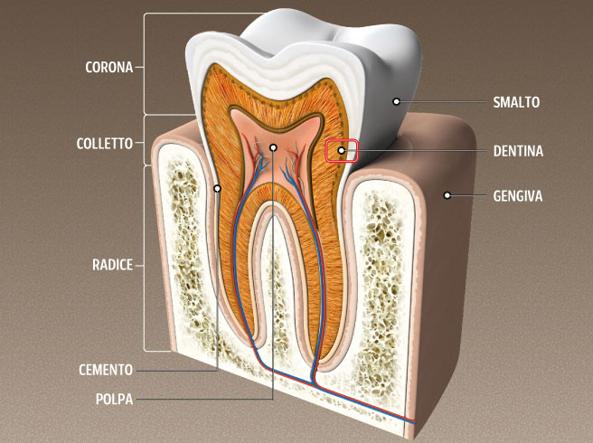
Dentin is produced by odontoblasts, cells of ectodermal origin present in the teeth. This fabric performs several important functions. First, it provides support to the enamel and protects the dental pulp. Dentin also transmits mechanical and sensory stimuli, such as pressure and temperature, from the tooth surface to the pulp.
The dentinal tubules are small channels present in the dentin. These tubules extend from the dental pulp to the enamel in the crown and the cementum in the root. They contain cells and fluid, which give dentin the ability to transmit stimuli to the tooth as a whole.

It is important to protect the dentin to maintain good dental health. The dentin can become sensitive when the dentinal tubules are exposed, for example due to shrinkage of the gingiva or damage to the dentin itself. Tooth sensitivity can cause pain when your teeth are exposed to hot, cold, acidic, or sweet foods or drinks.
To protect the dentin and reduce dental hypersensitivity, there are some precautions that can be taken. Maintaining good oral hygiene helps prevent the build-up of bacterial plaque and tartar, which can damage enamel and dentin. It’s also important to have healthy gums to protect the dentin around the root of the tooth.
There are specific toothpastes and pastes on the market to reduce the hypersensitivity of the dentin. These products contain ingredients like hydroxyapatite, potassium nitrate, stannous fluoride, and stannous chloride, which help repair enamel, calm dental nerves, and reduce dentin permeability.
It is advisable to consult your dentist for an accurate evaluation and to obtain specific suggestions for the protection and treatment of the dentin. Your dentist may recommend professional treatments such as dentin bonding or desensitizing procedures to reduce the symptoms of dental hypersensitivity.
In conclusion, dentin is an important tissue for dental health and its protection.
References:
http://www.iztacala.unam.mx/rrivas
https://pubmed.ncbi.nlm.nih.gov/9604576/
https://www.corriere.it/salute/cards/perche-denti-diventano-ipersensibili-fanno-male-come-affrontare-problema/dolore-uno-o-piu-denti-senza-carie_principale.shtml